Easy-to-understand health information
Dementia
Memory decline affecting daily life is not simply normal aging. Assessment considers Alzheimer's disease, vascular causes, medicines, sleep, depression, and potentially reversible conditions.
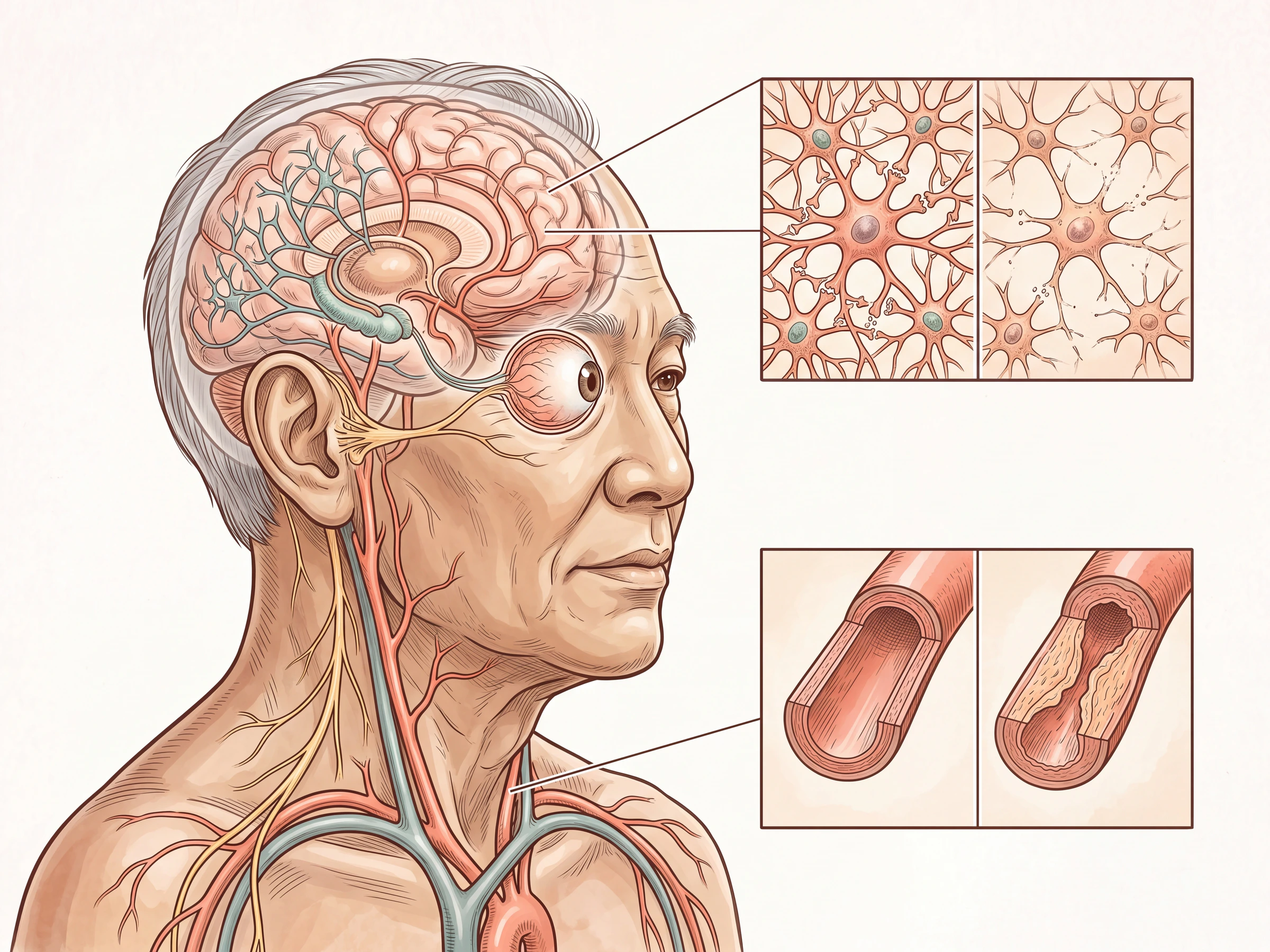
Summary before reading further
What is this topic, and why does it matter?
Warning signs include difficulty with familiar tasks or finances, repetition, getting lost, and changes in language or personality, rather than an occasional forgotten name.
Assessment may include information from someone close to you, cognitive testing, medication review, blood tests, hearing assessment, and brain imaging when needed.
Health glossary
- Vitamin B12
- Vitamin B12 is needed for blood formation and nerve function. Deficiency may cause anemia, numbness, or cognitive changes, requiring assessment of the cause.
- CT and MRI
- CT uses X-rays, while MRI uses magnetic fields and radio waves. The choice depends on the organ and clinical question.
- Biomarker or biological indicators
- A laboratory or imaging measurement. A change does not necessarily mean symptoms have improved.
What happens in the body?
Explain the mechanism step by step.
Slower recall with age, while daily activities remain intact, is not the same as dementia. Sudden confusion from infection, medicines, or electrolyte disturbances needs prompt assessment because it may be reversible.
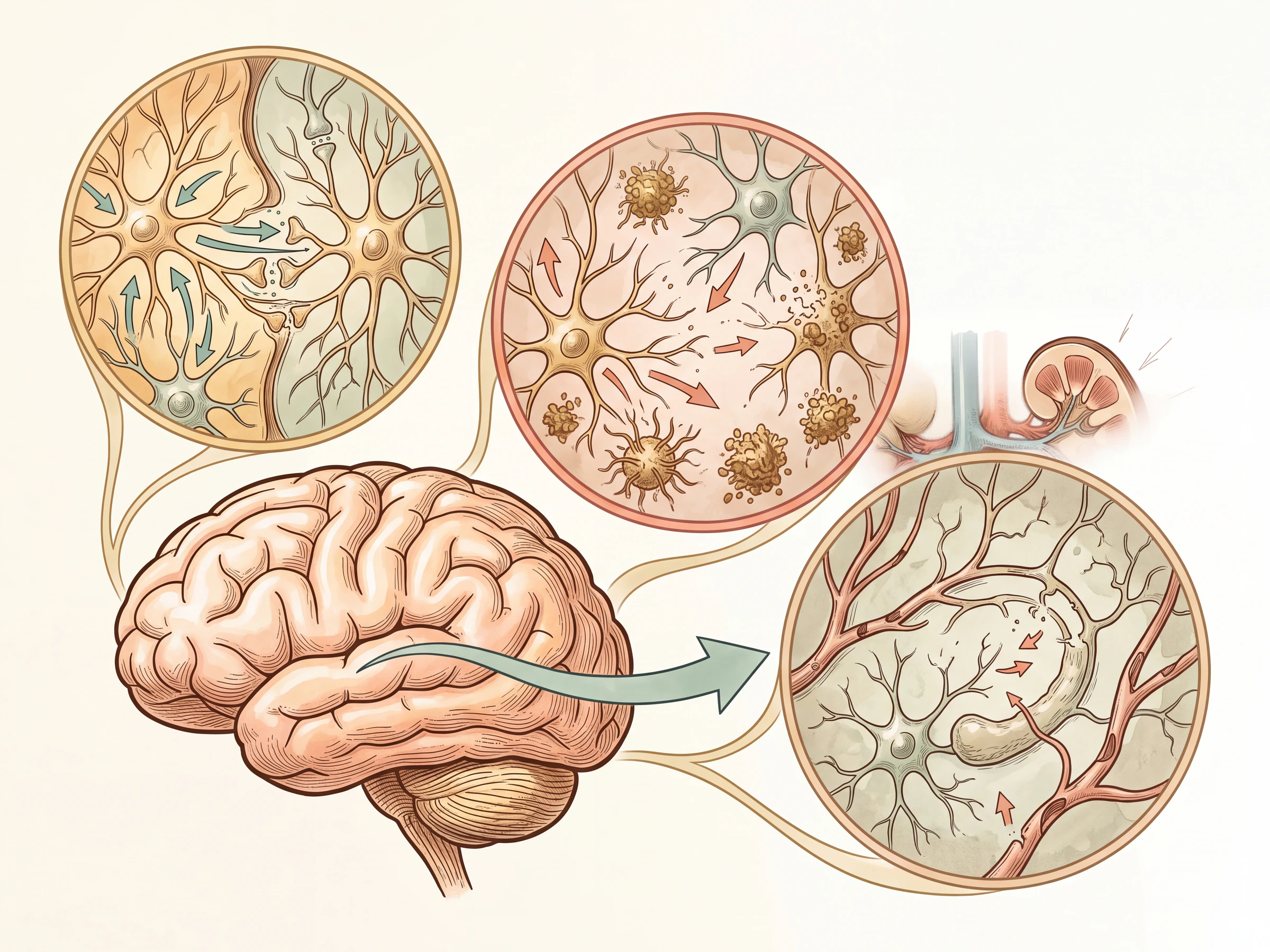
Part of the network is damaged.
The hippocampus supports memory. Other patterns of brain disease may first affect language, behaviour, or vision.
Abnormal protein or blood vessels
Abnormal amyloid, tau, alpha-synuclein, or small-vessel damage can disrupt brain connections.
Reduced cognitive reserve
When the brain can no longer compensate for damage, complex tasks and everyday functioning begin to change.
Values or criteria that you should know
Dementia assessment considers declining everyday function, not a single memory score.
Screening scores depend on language, education, hearing, vision, and mood. Compare them with previous abilities and observations from someone close to the person.
A change from your usual pattern.
Managing finances, medicines, travel, meals, and safety.
- Reference range
- Mild forgetfulness with preserved problem-solving and independence may be monitored.
- You should make an appointment for an evaluation.
- Getting lost, difficulty managing medicines or payments, or ongoing loss of daily abilities warrants assessment.
- Should be evaluated urgently
- Confusion developing over hours or days may be delirium caused by illness or medication. Its cause needs urgent assessment.
Cognitive screening
such as Mini-Cog, MoCA or MMSE.
- Reference range
- No single cognitive test threshold applies across all languages and education levels.
- You should make an appointment for an evaluation.
- An abnormal cognitive score needs further assessment of hearing, vision, mood, medicines, thyroid function, and nutrient status as appropriate.
- Should be evaluated urgently
- A normal score does not exclude early disease when daily functioning is clearly declining.
Causes · Symptoms · Examination · Care
See important information in one place.
Causes and related factors
- Age, genetics and Down syndrome
- High blood pressure, diabetes, smoking, hearing loss, and inactivity.
- Head injury, isolation, and stroke
Common symptoms
- Difficulty remembering recent events, repeated questions, or getting lost.
- Difficulty managing money, medicines, meals, or work.
- Language, personality, visual processing, or acting out dreams may be early features.
How do doctors check?
- History from the person and someone close to them, alongside cognitive testing.
- Review medicines, depression, thyroid function, B12, hearing, and physical health.
- MRI, CT, or selected biomarkers to help identify the cause.
Start taking care of it systematically.
- Support vascular health, exercise, sleep, and treatment of hearing loss.
- Arrange medications, safety, driving, and documents in advance.
- Treatment and caregiver support depend on dementia type and stage.
Important things you should know
Keep these points in mind.
Alzheimer's disease is one cause of dementia, not the only one.
Vascular dementia, Lewy body disease, and other conditions can have different patterns.
Acute confusion is not typical gradual dementia progression.
Infection, medicines, dehydration, or abnormal glucose can cause delirium and need prompt assessment.
Risk can be reduced in many ways.
Support lifelong brain health through blood pressure care, hearing care, not smoking, mental activity, social contact, and movement.
Daily food and care
Start with manageable everyday steps.
- A varied diet including vegetables, beans, whole grains, fish, and unsaturated fats supports vascular and brain health. No single supplement prevents dementia.
- Review weight, swallowing, dental health, and meal preparation when food intake falls or preparing meals becomes difficult.
Read on to understand.
Read on for complete information on health and products.
Main references